Thursday, November 30, 2006

The kind of guy you have working for you

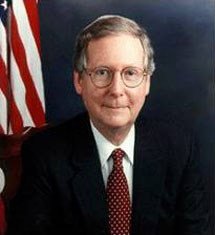
I never thought I'd be posting a link to anything written in my local paper, but this column, by the editor of another small town Kentucky paper, offered a jaw-droppingly creepy anecdote about Mr. "Money Is Speech," Senate Minority Leader Mitch McConnell:

In the fall of 2002, the county weekly where I was editor was paid a visit by one of the most important politicians in the country.

Sen. Mitch McConnell, R-Ky., was in an easy re-election race against a little-known, inexperienced opponent. But he was taking nothing for granted, so he had come to Nicholasville to seek the endorsement of The Jessamine Journal.

He had scheduled an interview with our publisher, Dave Eldridge, but Dave thought that, as editor, I too should be involved in the conversation.

When McConnell and his entourage arrived, we greeted them warmly.

We weren't prepared for what happened next. An aide produced a manila folder, opened it and showed Dave a photo taken of the rear of my car 10 years before showing bumper stickers opposing the United States' illegal proxy war in Nicaragua.

"This is the kind of guy you have working for you," McConnell said.

Dave laughed and brushed it off. There were no secrets between us where our politics were concerned. We argued politics for fun.

But I couldn't believe a United States senator had a 10-year-old dossier on me! I was flattered. The intent, I'm sure, was to embarrass. And I was embarrassed, but for him, not myself. How petty for someone of his stature to engage in gutter fighting.

But that's the kind of guy you have working for you.


Questions abound.

Who provided McConnell with the photos?
Was it a volunteer, or was this an assignment?
Was someone taking pictures of the bumpers of every small town newsman in the Commonwealth?
Was this done with public funds?

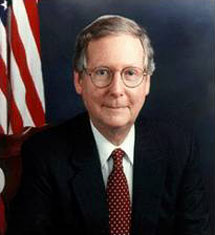
And most important,

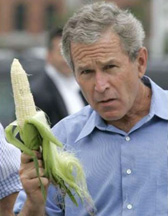
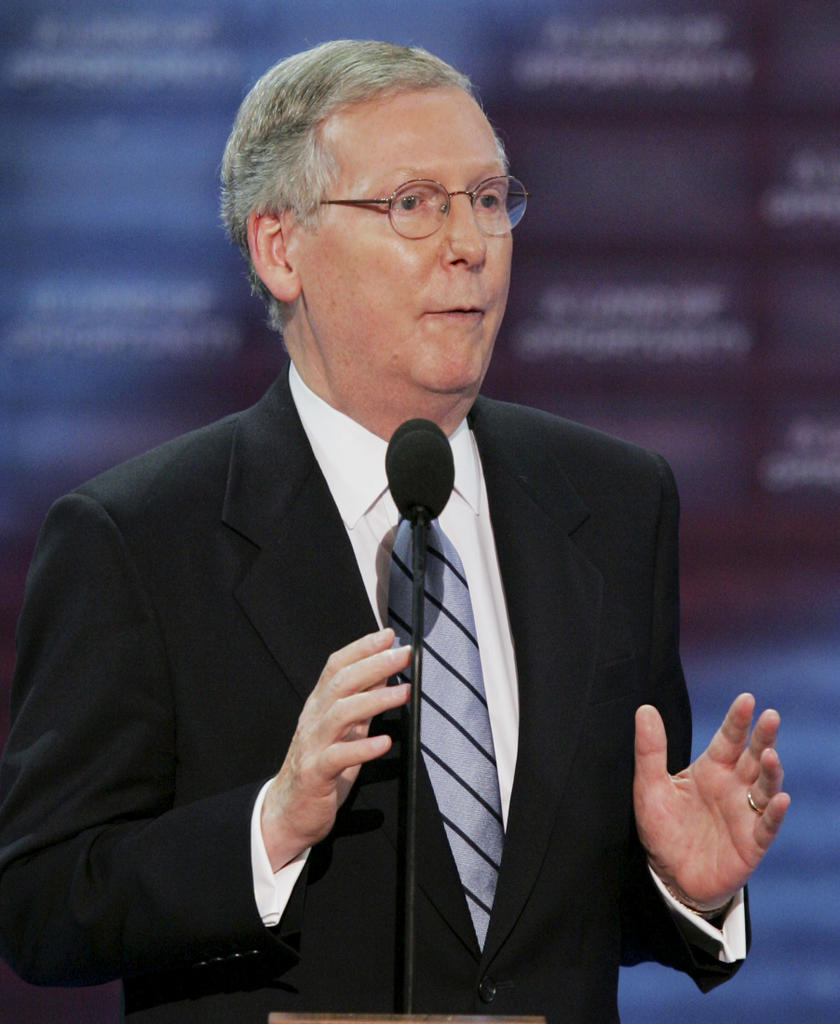
What could possibly be the cause for his facial expression in the picture above?

Wednesday, November 29, 2006

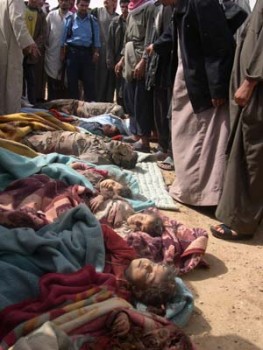
Friedman: "Harder, harder!"

You call this war!? The man with the mustache wants more!
Photo: Dahr Jamail


I was naive enough to hope for the day when Thomas Friedman owned up, but no.

The columnist whose dimwitted mantra--in not one, but three unprovoked American aggressions against defenseless countries--was "Give war a chance" (get it?) has doubled down, and says that the problem with Iraq can only be solved with more American mayhem.

He even uses the phrase "iron fist" with no apparent trace of irony.

What a fucking asshole.

Chris Floyd has an appropriately enraged response:
You would think that by now we would have "supp'd full with horrors" on the New York Times op-ed pages. What could be worse than the atrocities that have filled those gray columns in the past few years, the loud brays for war, the convoluted excuses for presidential tyranny, the steady murmur of chin-stroking bullshit meant to comfort the comfortable elite and confirm them -- at all times, at any cost -- in their well-wadded self-righteousness? Surely, you would think, we have seen the worst.

If this was your thought, then alas, alas, alack the day, you were bitterly mistaken, my friend. Comes now before us the portly, fur-lipped figure of Thomas Friedman, Esq., who today has penned what must be the most morally hideous and deeply racist column ever to appear in those rarefied journalistic precincts: "Ten Months or Ten Years."

It seems that this very enthusiastic promoter of the unprovoked war of aggression against Iraq - which he proudly called "a war of choice," apparently not realizing that he was parroting the propagandists of the Nazi regime that killed millions of his ethnic kindred -- has now discovered that Iraqi Arabs are hopeless, worthless barbarians, broken by "1,000 years of Arab-Muslim authoritarianism" and can only be held together by an "iron fist."


And while we're on the subject of the pundit of our age, Matt Taibbi's "Flathead" is priceless....

Monday, November 27, 2006

An old friend and the greatest story ever sold

Clearing the cobwebs from a week of travel and Thanksgiving festivities.

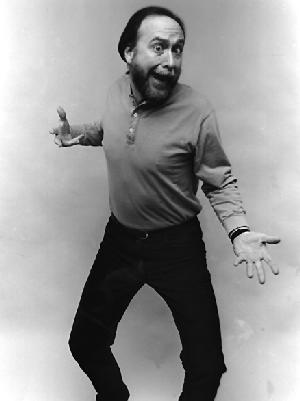
While scanning the channels chez the in-laws on Thanksgiving night, came upon an HBO George Carlin performance from 1999, "You Are All Diseased." For years I had mistakenly filed Mr. Carlin away under "1960s counterculture comics," but that was my loss.

I was amazed at how biting and funny he was (and this was at the tail end of the Clinton years, with nary a Dubya nor a neocon nor a Patriot Act in sight).

I couldn't find a transcript of that performance, but did find some of the material from other sources he used in the show, including this one, dated 1997 but more relevant than ever today:
In the Bullshit Department, a businessman can't hold a candle to a clergyman. 'Cause I gotta tell you the truth, folks. When it comes to bullshit, big-time, major league bullshit, you have to stand in awe of the all-time champion of false promises and exaggerated claims: religion. No contest. No contest. Religion. Religion easily has the greatest bullshit story ever told.

Think about it. Religion has actually convinced people that there's an invisible man -- living in the sky -- who watches everything you do, every minute of every day. And the invisible man has a special list of ten things he does not want you to do. And if you do any of these ten things, he has a special place, full of fire and smoke and burning and torture and anguish, where he will send you to live and suffer and burn and choke and scream and cry forever and ever 'til the end of time!

But He loves you.

He loves you, and He needs money! He always needs money! He's all-powerful, all-perfect, all-knowing, and all-wise, somehow just can't handle money! Religion takes in billions of dollars, they pay no taxes, and they always need a little more. Now, you talk about a good bullshit story. Holy Shit!

And check out this homemade video clip featuring Carlin on bombing, religion, the media, and God... Courtesy of TAMMRON....

Wednesday, November 15, 2006

The new Congress and your food: If ADM is smilin', you shouldn't be

First the good news....

Richard Pombo is gone!

And so are such other "unlamented industrial-agriculture enthusiasts [as] Sens. Rick Santorum (R-Pa.), George Allen (R-Va.), Conrad Burns (R-Mont.), Mark Kennedy (R-Minn.), and James Talent (R-Mo.)."

But as Tom Philpott, that sensible and articulate voice of sustainable agriculture, points out in Grist, "for every bought-and-paid-for Republican that the public sent packing, the agribusiness lobby has a reliable Democrat waiting at the gate. "

And this Congress will be entrusted with writing a Farm Bill.

Says Philpott, "Since the Nixon era, Farm Bills have essentially become five- or six-year plans for using government power to extract wealth from farmers and deposit it on the bottom lines of the agribusiness giants -- sustainability and environmental concerns be damned. Unhappily, prospects for reforming the 2007 version look bleak."

First at the trough will be "the Exxon of corn," Archer Daniels Midland, the world's biggest corn buyer and the No. 1 U.S. ethanol producer. "ADM has managed over the last 25 years to rig up lucrative markets for two related products that would never have gained traction in a free market: corn-based ethanol and high-fructose corn syrup. Both thrive by grace of a baroque and related set of government subsidies and quotas. "

Nancy Pelosi has already stumped through Minnesota pledging allegiance to ethanol subsidies--er, I mean, the limitless potential of the fuel of the future. And in the Senate Tom Harkin looks to take over the ag committee. "This is the man who, facing down critics who dared question ethanol's environmental value, once took a swig of the corn-based fuel on the Senate floor, evidently to demonstrate its salubrious qualities."

And in the White House, well, let's not go there....
All of this is tremendously disheartening, yet it must not be allowed to forestall political action. Indeed, on several fronts, pro-sustainable agriculture forces are rolling out Farm Bill agendas that challenge the agribusiness chokehold on farm policy. These efforts reassert farming not as an industrial process geared to the needs of conglomerates, but rather as a way to build community, feed people, and regenerate soil.

From the heartland, the Iowa-based National Family Farm Coalition has come out with a farmer-oriented agenda [PDF] that demands the end of the direct-payment subsidies so beloved by ADM and other large corn buyers. In Washington, D.C., American Farmland Trust has released a comprehensive Farm Bill plan that makes a powerful case for replacing commodity subsidies with "green payments" that would reward farmers for environmental stewardship.

Meanwhile, the Farm and Food Policy Project, a broad coalition of environmental, sustainable-agriculture, and anti-hunger groups, plans to release its Farm Bill proposal sometime this month.

These efforts are critically important. Any citizen interested in creating a sane food system should study them and pressure their representatives to vote accordingly during the Farm Bill debates.

Monday, November 13, 2006

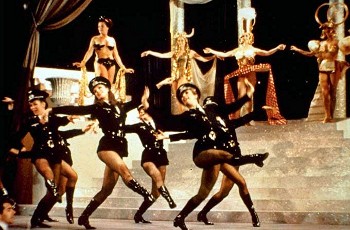
"Springtime for Hitler"

Will Bunch wonders if Bush and Rove were "the Producers" of an intentional flop last week.

As evidence, he presents a series of final week Republican fuckups that look more than a little fishy, given the fact that the Red Team had been, until Tuesday, a paradigm of ruthless efficiency in every election this millennium.

1. [I]n Pennsylvania, why did the Bush-led Justice Department step up its investigation of vulnerable U.S. Rep. Curt Weldon just weeks before Election Day....

2. How did it come to pass that the predatory sexual habits of Rep. Mark Foley -- which we now know was a closely held secret among GOP insiders for years -- suddenly leaked out to ABC's Brian Ross a month before the election. There is one political operative in this country who is notorious for using rumors or allegations of homosexuality or pedophilia to destroy his election rivals -- and that operative is Karl Rove. According to accounts of how the story broke, it was Republican staffers who leaked the emails to Ross and to other D.C. insiders on the summer of 2006.

3. Given that Bush's approval rating hovered in the 35 to 40 percent range thoughout the election season, why did the White House suddenly make the president more visible by having more press conferences -- and thus taking more hostile questions on Iraq and other unpleasant subjects -- than at any other time in his six-year presidency, including two in roughly one week during the October home stretch?

4. Despite voters' increasingly strong dislike of Rumsfeld, the Defense Secretary was deliberately put in front of the cameras at a key time in the race, on Oct. 26, just 12 days before the election....

5. Likewise, given Bush's low popularity and approval ratings, why was he dispatched at the last minute to the closest races, when other Republicans thought that his presence did more harm than good? Bush appeared with Sen. Conrad Burns in Montana just five days before the election, and for Missouri Sen. Jim Talent the day after that; and made frequent visits on behalf of Virginia Sen. George Allen. All three lost by narrow margins. Tennesee's GOP candidate Bob Corker got the more popular Laura Bush instead...and won.

6. Just four days before the election, and with polls showing the Iraq war highly unpopular, you had these comments from Vice President Cheney: The Bush administration is determined to continue "full speed ahead" with its policy in Iraq, regardless of Tuesday's midterm elections, Vice President Cheney said Friday. Cheney said in an interview with ABC News that the administration is convinced that it is pursuing the right path in Iraq. "It may not be popular with the public. It doesn't matter, in the sense that we have to continue what we think is right," Cheney said. "That's exactly what we're doing. We're not running for office. We're doing what we think is right."

7. Then you had the whole Cheney-Rumsfeld fiasco. Bush went out of his way to praise the two men just five days prior to the election, knowing full well how unpopular they were....

8. And of course Rove made a number of confoundingly bad decisions, dumping millions of dollars into Senate races that seemed hopeless for the Republicans -- and ultimately were -- in the solidly "blue" states of New Jersey and Maryland, where in hindsight a few dollars spent in the right ways might have salvaged the once-"red" Montana and Virginia.

And why, Bunch asks, would the Republicans want to do such a thing?

Everything we watched Bush do since Wednesday morning seems to be geared in one direction: Bringing Democrats to the table on Iraq. The problem for the Democrats is this: They came to office without a plan for Iraq. Bush doesn't seem to have one either. Nobody does, although James Baker and his friends are said to be working on one. But now whatever emerges from the coming discussions will not longer be the GOP plan. It will be the Bush/Democrats' plan.

And we're afraid that the war planners are expecting things to get worse over there in 2007. Good politicians are able to ensure that when bad fallout is inevitable, that the blame can be shared. A GOP majority in Capitol Hill would have guaranteed that "the Republican war in Iraq" would dominate the 2008 presidential race, and that equation would hand the keys to the White House to the Democrats for sure. And Bush's patrons -- oilmen and the defense contractors -- need the White House a lot more than Congress, especially after the recent expansion of presidential powers. And now both parties will have a stake in Iraq, and the ... coming fiasco there.

I can't tell for sure if Bunch is completely serious here, but he speaks for a lot of folks who wonder why the Republicans really went down without a fight. As regards the Iraq mess, the Democrats won't be able to skate away from responsibility. Nor should they be allowed to.

Friday, November 10, 2006

"You gotta go, you gotta go"

... or "Don't let the door hit your fat ass on the way out, you son-of-a-bitch."

From Glenn Greenwald:
It doesn't look like there there is excessive meekness or conciliation coming from the soon-to-be Chairman of the House Ways and Means Committee, Rep. Charlie Rangel, who "revealed yesterday that he's got his eye on Capitol Hill office space now held by . . . Vice President Dick Cheney":
"Mr. Cheney enjoys an office on the second floor of the House of Representatives that historically has been designated for the Ways and Means Committee chairman," explained Rangel . . . "I talked to [future House Speaker] Nancy Pelosi about it this morning," a giddy Rangel crowed during a news conference at his Harlem office. "I'm trying to find some way to be gentle as I restore the dignity of that office," chuckled Rangel. "You gotta go, you gotta go."

Rummy, you're scummy, but it wasn't ALL your fault

One down, one to go...
I can think of no public figure, OK, there's one, whose comeuppance would be met with greater glee. And yet, as Tony Karon points out, the idea that we got rid of the one problem child is self-serving and just plain wrong.

The news that Defense Secretary Donald Rumsfeld is to be the Bush Administration’s ritual sacrifice on the altar of its electoral rebuke comes as no surprise: It had been obvious for months now the call for Rumsfeld’s head is a kind of consensual fetish among those who supported the Iraq war for not having to deal with their own culpability in the catastrophe it inevitably became. I say “inevitably” because you don’t have to have a working knowledge of Iraqi history to have anticipated how Iraqis would respond to their country being occupied by a foreign army — you simply needed to have watched “Red Dawn” back in the 80s. (A working knowledge of Iraqi history, as many U.S. military types who quietly but firmly opposed the war had, would certainly have helped anticipate some of the specific sectarian and regional consequences, but that’s another matter.)

But instead of admitting and reckoning with the fact that the war they advocated was a catastrophically bad idea, everyone from neocon hacks to flip-flopping Democrats, Bob Woodward (arch channeler of White House sources) and the self-styled “liberal hawks” of the chattering classes, like Peter Beinart and George Packer, have signed on to the notion that it was a good war, the right war, executed badly, because Rumsfeld adhered to some bizarre capital-intensive theory of warfare. In other words, if Rumsfeld had simply sent more troops, the outcome would have been different.

And that narrative, which the White House itself appears to have adopted in the wake of its midterm electoral drubbing, is a self-serving evasion. Indeed, the “blame Rumsfeld for Iraq” chorus reminds me of nothing as much as listening to Trotskyists trying to rescue Bolshevism by blaming its grotesque consequences on Stalin’s “implementation” rather than on its inner logic.

Having more troops in Iraq would have made a tactical differences, and might have altered the story arc and timeline, but I can’t see how it would have produced a fundamentally different outcome. And the idea evades the reality that the troop levels in Iraq were a function of the politics of the war rather than of some whacky CEO cost-cutting obsession. In fact, the chiefs of staff (and Powell, too, initially) were trying to stop the war, or at least slow the train by making the project look prohibitive because of the troop levels required. They believed it needed up to a half million troops, and they probably also knew that presented with a realistic picture of the cost and commitment, that Congress would balk. That was the reason why, for example, Paul Wolfowitz jumped so aggressively down General Shinseki’s throat when he suggested before Congress that the U.S. would need a “few hundred thousand” troops to secure the peace. It wasn’t that Wolfowitz was seized by some Rumsfeldian “New Generation Warfare” theory; it’s that he was on board with a political strategy to make the invasion happen and destroy any obstacle that would prevent it.
Karon should be an everyday read. He's is a great blogger, a humane sophisticated voice. We should be happy that he has a forum at Time. com (God knows there are few mainstream columnists of his caliber).

Other recent Karon posts absolutely slaughter the conventional wisdom on such sacred mainstream sacred cows as the impossibility of compromise with Hamas and the existence of an Iran "crisis." His piece on Beijing's geopolitics is a marvel of reason and concision. And I resisted at first, but came around to his finding Borat more than a little troubling:
So, you wonder what the Kazakh’s must make of being tarred with the brush of anti-Semitism when the reality couldn’t be further from the truth? I’d say that Sascha Baron Cohen is a prat, and a racist prat at that: Essentially, he’s operating his own stereotype, i.e. that Muslims are inherently anti-Semitic....

Let’s just say Baron needs to go back to Oxford and learn a little history — he might learn that over the long haul of Jewish history, we’ve done a lot better under Islamic rule than we’ve fared in the Christian West. Then again, if Sascha Baron Cohen did a skit of some provincial Catholic bishop singing “throw the Jew down the well”, he wouldn’t be opening his movie all over America right now.

Thursday, November 09, 2006

Morning in America

Been away from blogging for a couple of days, reorganizing the home office and configuring my new computer. I didn't miss anything, did I?

I see Britney gave whatshisname his walking papers, and is sporting a new "svelte and single" look....

Oh yeah. Ah, the midterm elections. The results are better than a sharp stick in the eye, but I'm resisting actually being happy about all this.

Perhaps my naivete is showing but for the entire week I've been digesting, in slackjawed amazement, Matt Taibbi's recent "The Worst Congress Ever" cover story in Rolling Stone. Nothing he wrote was a state secret, yet it's not something we see every day in the respectable press. I read the Times and the Post a decent amount, and I have never seen an article in either of those august papers of record that spells out the Bush League (oh! didn't mean it, but it fits) bullshit that has gone on in Washington over the past six years.

To choose one of many vivid, funny/sad anecdotes, here's Taibbi on how the conference hearings have been run in the Bush era (they're the hearings needed to iron out the differences between House and Senate versions of a bill):
According to the rules, conferences have to include at least one public, open meeting. But in the Bush years, Republicans have managed the conference issue with some of the most mind-blowingly juvenile behavior seen in any parliament west of the Russian Duma after happy hour. GOP chairmen routinely call a meeting, bring the press in for a photo op and then promptly shut the proceedings down. "Take a picture, wait five minutes, gavel it out -- all for show" is how one Democratic staffer described the process. Then, amazingly, the Republicans sneak off to hold the real conference, forcing the Democrats to turn amateur detective and go searching the Capitol grounds for the meeting. "More often than not, we're trying to figure out where the conference is," says one House aide.

In one legendary incident, Rep. Charles Rangel went searching for a secret conference being held by Thomas. When he found the room where Republicans closeted themselves, he knocked and knocked on the door, but no one answered. A House aide compares the scene to the famous "Land Shark" skit from Saturday Night Live, with everyone hiding behind the door afraid to make a sound. "Rangel was the land shark, I guess," the aide jokes. But the real punch line came when Thomas finally opened the door. "This meeting," he informed Rangel, "is only open to the coalition of the willing."

They've set the bar pretty damn low for the Dems.

Of course. OF COURSE. the Republicans that have been running the show for the past six years are unspeakably evil, and I can't say I'm unhappy that they have been smoked. But. But.

Sharper minds than mine have been all over the fact that the Democrat establishment has been fighting hard to tamp down the antiwar ardor. In Counterpunch, Cockburn and St. Clair write:
Wherever they were given the opportunity, voters across the country went strongly for antiwar candidates. True, the national Democrats, led by Rahm Emanuel of the Democratic Congressional Campaign, had tried pretty successfully to keep such peaceniks off the ballot, but in a few key races the antiwar progressives romped home. The Democrats won, despite Emanuel. If the Clintonites weren't still controlling most of the campaign money, and more openly antiwar populi sts had been running, the Democrats today would probably be looking at a wider majority in the House and one committed solidly to getting out of Iraq.
And I have to love being able to rely on Billmon for a serious dose of well-reasoned pessimism. Commenting on the fickleness of last-minute deciders, he writes:

[I]t seems worth remembering that the size of the Democratic wave was hugely influenced at the margin (which is where it counts) by that tenth of the electorate who couldn't make up their minds until literally the last minute -- despite everything that's been done, said, reported and revealed over the two years since they were last asked to take the fate of the world's only superpower into their hands.

Next time, they could easily break the other way, for reasons just as ephemeral.

And an even bigger spoilsport is Jeff Wells of Rigorous Intuition who, in an unusually flat piece, does manage to open with a damn good question:
What kind of world would greet Robert Gates' appointment as Secretary of Defense as a happy news item? Regrettably, this one. That's the true Bush legacy: diminished expectation, and delight and surprise at achieving debased, small victories that have to be handed to us.
I could even top them. Well, OK, so I will. Here ya go, your tax dollars still hard at work:


Oops. We did it again.

Monday, November 06, 2006

Well, that was a shocker!

New, improved Iraq:
"Two channels, Salahiddin and Zawra, shut down.
Security forces raid the offices of the channels."
(from riverbend).

Stunning verdict rendered in Baghdad, no?

A couple of comments. First, let's remember that, as Juan Cole points out,"The Dujail charges have the advantage for Washington of stemming from an incident that occurred a year before the U.S. rapprochement with the Iraqi Baath Party in 1983."

All the other graver charges that could be brought against Saddam Hussein, could be brought against his American enablers as well.

Writes Cole:
The only conclusion one can draw from available evidence is that Rumsfeld was more or less dispatched [to Baghdad, for a second time, in 1985, when he was a "private citizen," by the Reagan Administration] to mollify Hussein and assure him that his use of chemical weapons was no bar to developing the relationship with the U.S., whatever the State Department spokesman was sent out to say. As former National Security Council staffer Howard Teicher affirmed, “Pursuant to the secret NSDD [National Security Directive], the United States actively supported the Iraqi war effort by supplying the Iraqis with billions of dollars of credits, by providing US military intelligence and advice to the Iraqis, and by closely monitoring third country arms sales to Iraq to make sure that Iraq had the military weaponry required.” The requisite weaponry included cluster bombs. Whether it also included, from Washington’s point of view, chemical weapons and biological precursors for anthrax, Teicher does not say.

... When the Dujail case is resolved and the tribunal trying Hussein goes on to other crimes, sooner or later the issue of chemical weapons use must arise. Iran is already furious that the tribunal seems unlikely to charge Hussein for his battlefield deployment of this weapon. When the issue arises, it will be difficult for Donald Rumsfeld to avoid sharing the docket, at least symbolically, with his old friend, Hussein. Rumsfeld helped to forge the U.S. alliance with Iraq that lasted from 1984 until Hussein’s invasion of Kuwait in August of 1991. He did so in full knowledge that the Baath regime was using mustard gas--which severely burns the lungs--against the Iranian children sent by Khomeini to launch “human wave” attacks. One Iranian survivor commented that with each flaming breath he takes, he wishes the gas had killed him. The pogrom against the Shiites of Dujail was a horrible crime. Far more horrible ones, in which the U.S. government was intimately complicit, were to follow.
Read the whole piece...

Note: Cole's piece is from 2005. For a more contemporaneous take, please read Riverbend's reaction:
I’m more than a little worried. This is Bush’s final card. The elections came and went and a group of extremists and thieves were put into power (no, no- I meant in Baghdad, not Washington). The constitution which seems to have drowned in the river of Iraqi blood since its elections has been forgotten. It is only dug up when one of the Puppets wants to break apart the country. Reconstruction is an aspiration from another lifetime: I swear we no longer want buildings and bridges, security and an undivided Iraq are more than enough. Things must be deteriorating beyond imagination if Bush needs to use the ‘Execute the Dictator’ card.

Iraq has not been this bad in decades. The occupation is a failure. The various pro-American, pro-Iranian Iraqi governments are failures. The new Iraqi army is a deadly joke. Is it really time to turn Saddam into a martyr?

... It’s not about the man- presidents come and go, governments come and go. It’s the frustration of feeling like the whole country and every single Iraqi inside and outside of Iraq is at the mercy of American politics. It is the rage of feeling like a mere chess piece to be moved back and forth at will. It is the aggravation of having a government so blind and uncaring about their peoples needs that they don’t even feel like it’s necessary to go through the motions or put up an act. And it's the deaths. The thousands of dead and dying, with Bush sitting there smirking and lying about progress and winning in a country where every single Iraqi outside of the Green Zone is losing.

Friday, November 03, 2006

Number two ... but closing fast

Hey, here's betting after 808 more days (countdown is here), Dubya'll be number one on everyone's list.

From the Guardian:
America is now seen as a threat to world peace by its closest neighbours and allies, according to an international survey of public opinion published today that reveals just how far the country's reputation has fallen among former supporters since the invasion of Iraq.

Carried out as US voters prepare to go to the polls next week in an election dominated by the war, the research also shows that British voters see George Bush as a greater danger to world peace than either the North Korean leader, Kim Jong-il, or the Iranian president, Mahmoud Ahmadinejad. Both countries were once cited by the US president as part of an "axis of evil", but it is Mr Bush who now alarms voters in countries with traditionally strong links to the US.


And Billmon is quite good here on the dangers Dubya will continue to present as a lame duck, no matter who wins control of Congress:

But even if a November or December surprise isn't on the drawing boards, the historical pattern suggests a period of danger may lie ahead. The last two lame duck years of any president's second term are traditionally devoted to foreign policy, as the White House's domestic clout fades and the political focus shifts to the succession question. For most presidents, this usually means launching or intensifying ambitious diplomatic or peacemaking efforts, such as Clinton's bid to solve the Israeli-Palestinian conflict in one swift go at Camp David.

But Bush (or Cheney, take your pick) isn't like "most presidents." His diplomatic efforts, with few exceptions, have all reached what appear to be dead ends -- with the Israelis and the Palestinians, with the Iranians and probably with the North Koreans, although with Kim Jong-il who the hell knows?

If Shrub wants to spend his last two years rolling those stones up the hill only to watch them roll back again, more power to him. But at this point, unless he wants the words "Led America Into Its Worst Strategic Defeat Since Vietnam" chiseled on his historical tombstone, he's going to need a bigger flight forward to fly forward to.

What's more, compared to other recent administrations, Bush and/or Cheney will have maximum freedom of action to be as reckless as they want to be.

George Will has noted that the 2008 election will be the first election since 1952 in which neither a sitting president nor a sitting vice president are running for the top slot. Neocon Robert Kagan notes that this situation will free Bush from any need to worry about the consequences of his actions over the next two years -- in the way that Ronald Reagan had to keep George Bush's political interests in mind in 1988 and Bill Clinton tried to protect Al Gore's chances in 2000. That is, unless Shrub also cares about improving John McCain or Rudy Guilani or Mitt Romney's electoral chances. But when did a Bush ever give a shit about anyone not named Bush?

Read the whole Billmon piece...

Wednesday, November 01, 2006

Very sad news

The Times has a story on O'Connor's Bar and the legacy of owner Patrick O'Connor, who died October 8.

I lived a dozen long strides from O'Connor's from 1987 to 1992, and as I moved around Brooklyn was never more than a mile away, until packing up for Kentucky three years ago. O'Connor's was a home away from home.

I always hate to hear the old-timers saying "It's not like the old days," but of course with O'Connor's you have to say that. In the years prior to the hipster infusion, I spent many afternoons and evenings with half a dozen others at the bar, sometimes fewer. A Times report from early 2005 captions an interior shot of O'Connor's with the words: "Park Slope, Brooklyn, a neighborhood that a report says has more residents who drink to excess than average." The old-timer in me says, "That's nothin'. You shoulda seen it ..."

The prices were nice of course, the ambiance cozy, the old 45s jukebox an eccentric treasure trove--when Macnamara's Band (Bing Crosby) and Gloria (Laura Branigan) were two of the more popular selections-- but Mr. O'Connor himself was the main attraction. I sensed he disagreed strongly with me on all the hot-button issues, but he was always polite and always keen to keep the conversation going.

He was notorious for buying rounds, sometimes two or three in succession, just as you were getting ready to hit the road, and there were a good few subway rides to work where I cursed his geniality. We called that last-minute round-buying "Getting Pat-ed."

Pat moved to the day shift in later years and I regret not having stopped in more often. He was a wonderful, wonderful man.

And about that moose over the bar. O'Connor's was a dark, hazy place. Didn't matter if it was day or night. I remember once mentioning the moose in passing while chatting with a old guy who'd been coming in there for years. The conversation went on and on and I noticed the guy seemed a little distracted by something. Finally, twenty minutes after I mentioned it, he broke down and asked, "What moose?"

Earl Butz's dream

At Grist, Tom Philpott evokes the Ancient Mariner--"Water, water, every where,/Nor any drop to drink"--while looking at the absurdities of industrial agriculture in the midwest, where corn fields stretch to the horizon but the locals only eat what's grown in their region when it returns "in the form of corn-syrup-sweetened Coca-Cola and corn-fed McDonald's burgers."

"Currently, a typical farm in the Midwest produces inputs for industrial production. What if, instead," Philpott wonders, "farms focused on growing fresh food for their neighbors?"

He points to the work of independent Minnesota farm researcher Ken Meter who in a 2001 paper "Finding Food in Farm Country" [co-authored with John Rosales], " argues persuasively that the dismal economics of farm-state agriculture could be improved by developing local markets."
Meter's work shows that commodity farming, rather than building wealth, extracts money from rural communities. In a seven-county region of southeastern Minnesota in 1997, farmers brought in an impressive $866 million selling their wares. However, amazingly, they incurred $947 million in costs to do so -- a loss of a cool $80 million. Federal subsidies covered just half of that loss; the rest had to be made up by non-farming activities.

Moreover, nearly half of the $947 million in incurred expenses left the area, as payments to distant suppliers of seeds, fertilizer, and pesticides, or to banks in the form of interest.

Meanwhile, though, the seven-county region's 120,000 households were busily buying food and eating it. Meter reckons that southeastern Minnesotans were spending $500 million on food annually -- and only $2 million of it on fare grown within the region. Yet if they could manage to buy just 20 percent of their food from nearby growers, that would amount to $100 million in additional sales for the region's farms, more than wiping out their $80 million loss in 1997.
In spite of big ag having done all that it can to ensure that all energies of Midwestern farmers are directed toward "the mass production of a few inedible commodities," Philpott writes that Meter proves "in case study after case study" that "Farming for distant commodity markets sucks resources out of communities, and residents of those communities spend heavily on food from outside." A little effort at redeveloping atrophied local food markets might make the bread basket of America worthy of the name again.


And a little background as to how Iowa got this way, courtesy of Michael Pollan's NY Times article, The (Agri)Cultural Contradictions Of Obesity:

So why did we ever abandon [New Deal farm policy that featured price supports and grain reserves, with minimal costs, if any, to taxpayers]? Politics, in a word. The shift from an agricultural-support system designed to discourage overproduction to one that encourages it dates to the early 1970's -- to the last time food prices in America climbed high enough to generate significant political heat. That happened after news of Nixon's 1972 grain deal with the Soviet Union broke, a disclosure that coincided with a spell of bad weather in the farm belt. Commodity prices soared, and before long so did supermarket prices for meat, milk, bread and other staple foods tied to the cost of grain. Angry consumers took to the streets to protest food prices and staged a nationwide meat boycott to protest the high cost of hamburger, that American birthright. Recognizing the political peril, Nixon ordered his secretary of agriculture, Earl (Rusty) Butz, to do whatever was necessary to drive down the price of food.

Butz implored America's farmers to plant their fields ''fence row to fence row'' and set about dismantling 40 years of farm policy designed to prevent overproduction. He shuttered the ever-normal granary, dropped the target price for grain and inaugurated a new subsidy system, which eventually replaced nonrecourse loans with direct payments to farmers. The distinction may sound technical, but in effect it was revolutionary. For instead of lending farmers money so they could keep their grain off the market, the government offered to simply cut them a check, freeing them to dump their harvests on the market no matter what the price.

The new system achieved exactly what it was intended to: the price of food hasn't been a political problem for the government since the Nixon era. Commodity prices have steadily declined, and in the perverse logic of agricultural economics, production has increased, as farmers struggle to stay solvent. As you can imagine, the shift from supporting agricultural prices to subsidizing much lower prices has been a boon to agribusiness companies because it slashes the cost of their raw materials. That's why Big Food, working with the farm-state Congressional delegations it lavishly supports, consistently lobbies to maintain a farm policy geared to high production and cheap grain.

Sunday, October 29, 2006

"A good place to toss trash"

Bobbie Ann Mason has an angry, heartbreaking piece in the New York Times today on how her home state of Kentucky fits into the global economy.

Mason's op-ed brought to mind a comment by Wendell Berry earlier this year, as he responded to the proclamation that the University of Kentucky was determined to become a Top 20 national research institution by the year 2020.

I'm paraphrasing now, because I can't find the op-ed online, but Berry was, to say the least, skeptical of the idea that "Top 20" status was desirable or obtainable for UK, given that it is a land-grant institution situated smack dab in the middle of a state that is, in effect, a natural resources colony for the larger economies beyond its borders.

Today, Mason picks up Berry's thought...
In Kentucky we’re used to remote control. Historically, outsiders have dominated the place like a kudzu invasion. Many of the coal mines are owned by huge out-of-state companies. The coal and the profits depart, leaving behind ravaged land and poisoned streams, soil and air. In 2000, 300 million gallons of sludge spilled from a coal slurry pond in Martin County, a greater toxic accident than the Exxon Valdez oil disaster. You might not remember that, because Kentucky seems out of sight, out of mind — a good place to toss trash.
Actually, Mason soft-pedals the extent of the catastrophe, at least in comparison to the Exxon-Valdez disaster. At 300 million gallons, we're talking 30 times the extent of that notorious spill.

And just so you know, that Martin County spill happened in October 2000. In January 2001, as Dubya took office, investigators into the spill were told to "wrap things up"--just as they were getting started.

But of course Massey Energy, the parent company of the negligent mining outfit, had to pay massive fees to clean up the largest ecological disaster east of the Mississippi River. Well, yea, or so you'd think. But, no. An April 2002 fine 0f $110, 000 was later reduced to $5,600.

But wait, there's more to Kentucky than just coal catastrophes!

For example, consider our weapons-of-mass-destruction site, the Blue Grass Army Depot in Richmond, where a stockpile of chemical weapons has been languishing since World War II. At least 55,000 rockets, with 523 tons of chemical weapons, are stored in shabby igloos. How to dispose of toxins like mustard gas and sarin has been a debate for decades. And the stuff is prone to pesky leaks. But at last Kentucky is getting a $2 billion federal plant that will neutralize the weapons by separating the chemicals and washing them in water. It’s a pilot plant, to find out if this process will really work.

Local leaders insist on local hiring so the community can benefit economically. So the government contractor plans to recruit teenagers at high schools, vo-tech schools, even church groups, to train them for careers in working safely with weapons of mass destruction. One procedure will involve cutting the heads off chemical-filled rockets with something like a pipe cutter.

Then there are the leftover contaminants from the cold war. The Paducah uranium-enrichment plant has been cleaning up its old piles of radioactive uranium, tritium, plutonium and what-have-you, and now it has a chance of opening a major recycling plant for nuclear waste from all over the globe. It would treat spent fuel rods from nuclear reactors in order to salvage the residue of radioactive uranium and plutonium for use in power plants.

As part of the Bush initiative to recycle nuclear waste, the contaminated byproducts would come (by flatcar? 18-wheeler? FedEx?) into our state. Importing deadly radioactive stuff would be a boon for the community, creating up to 6,000 jobs, so you can’t argue. Or can you?

That’s not all. Kentucky’s politicians have also proposed building a $451 million lab for the study of pathogens that might be unleashed in a bioterrorism attack (ebola, anthrax). Before the boom in weapons of mass destruction, Kentucky’s economy depended on its land. But with farms disappearing, country life is becoming a memory.

To preserve the idea of Kentucky as a state of farms with a farm state of mind, we’re getting a $24 million agriculture museum. I imagine a pretend working farm with Civil War re-enactors playing old-timey farmers.

In rural Kentucky, where the health of the land once meant plowing manure under the soil each spring, the future is not in cows and corn. We’re now poised to take on the burden of the world’s poisons. Y’all come!

Read the whole op-ed...

Tuesday, October 17, 2006

Turning one solution into two problems

Michael Pollan, in his discussion of the latest food scare, invokes Wendell Berry's observation that "when we took animals off farms and put them onto feedlots, we had, in effect, taken an old solution — the one where crops feed animals and animals’ waste feeds crops — and neatly divided it into two new problems: a fertility problem on the farm, and a pollution problem on the feedlot."

Our industrial agriculture system is making people sick at an alarming rate. "The Centers for Disease Control and Prevention estimate that our food supply now sickens 76 million Americans every year, putting more than 300,000 of them in the hospital, and killing 5,000."

The solution, to Pollan, to me, to any lucid human being, is simple: decentralize the food system. But it gets complicated because of government bureaucracies and industrial producers protecting their massive investments:

These days, when people make the case for buying local food, they often talk about things like keeping farmers in our communities and eating fresh food in season, at the peak of its flavor. We like what’s going on at the farmers’ market — how country meets city, how children learn that a carrot is not a glossy orange bullet that comes in a bag but is actually a root; how we get to taste unfamiliar flavors and even, in some sense, reconnect through these foods and their growers to the natural world. Stack all this up against the convenience and price of supermarket food, though, and it can sound a little. . .sentimental.

But there’s nothing sentimental about local food — indeed, the reasons to support local food economies could not be any more hardheaded or pragmatic. Our highly centralized food economy is a dangerously precarious system, vulnerable to accidental — and deliberate — contamination. This is something the government understands better than most of us eaters. When Tommy Thompson retired from the Department of Health and Human Services in 2004, he said something chilling at his farewell news conference: “For the life of me, I cannot understand why the terrorists have not attacked our food supply, because it is so easy to do.” The reason it is so easy to do was laid out in a 2003 G.A.O. report to Congress on bioterrorism. “The high concentration of our livestock industry and the centralized nature of our food-processing industry” make them “vulnerable to terrorist attack.” Today 80 percent of America’s beef is slaughtered by four companies, 75 percent of the precut salads are processed by two and 30 percent of the milk by just one company. Keeping local food economies healthy — and at the moment they are thriving — is a matter not of sentiment but of critical importance to the national security and the public health, as well as to reducing our dependence on foreign sources of energy.

Yet perhaps the gravest threat now to local food economies — to the farmer selling me my spinach, to the rancher who sells me my grass-fed beef — is, of all things, the government’s own well-intentioned efforts to clean up the industrial food supply. Already, hundreds of regional meat-processing plants — the ones that local meat producers depend on — are closing because they can’t afford to comply with the regulatory requirements the U.S.D.A. rightly imposes on giant slaughterhouses that process 400 head of cattle an hour. The industry insists that all regulations be “scale neutral,” so if the U.S.D.A. demands that huge plants have, say, a bathroom, a shower and an office for the exclusive use of its inspectors, then a small processing plant that slaughters local farmers’ livestock will have to install these facilities, too. This is one of the principal reasons that meat at the farmers’ market is more expensive than meat at the supermarket: farmers are seldom allowed to process their own meat, and small processing plants have become very expensive to operate, when the U.S.D.A. is willing to let them operate at all. From the U.S.D.A.’s perspective, it is much more efficient to put their inspectors in a plant where they can inspect 400 cows an hour rather than in a local plant where they can inspect maybe one.

The future looks fairly scary to me, as someone who believes in the idea of local food economies. Every scare drives consumers deeper into the very system that is making them less safe. (That paradoxical scenario has a familiar ring to it....)
It’s easy to imagine the F.D.A. announcing a new rule banning animals from farms that produce plant crops. In light of the threat from E. coli, such a rule would make a certain kind of sense. But it is an industrial, not an ecological, sense. For the practice of keeping animals on farms used to be, as Wendell Berry pointed out, a solution; only when cows moved onto feedlots did it become a problem. Local farmers and local food economies represent much the same sort of pre-problem solution — elegant, low-tech and redundant. But the logic of industry, apparently ineluctable, has other ideas, ideas that not only leave our centralized food system undisturbed but also imperil its most promising, and safer, alternatives.


Read the whole article...

Here's a group review of books on the food system by Tom Philpott at Grist...

Monday, October 16, 2006

South turns against the war

A new poll from the Institute for Southern Studies indicates a major swing in attitudes towards the Iraq invasion among residents of the South, a bastion of pro-war sentiment for the first three years of Bush's war.

(For reasons why the South became so pro-war, the very same Institute offers Missiles and Magnolias.)

Some excerpts from the current poll:
The results signal a shift in Southern attitudes towards Iraq. As recently as July 2005, a Pew Center poll found 53% of Southerners believed using military force against Iraq was "the right decision," the highest level of support in the country. Most polls since 2002 have shown support for the Iraq war in Southern states rating higher than, or even with, national attitudes.

"The depth and strength of anti-war sentiment in the South is eye-opening, given the region’s high level of military pride and early embrace of U.S. policy in Iraq," says Chris Kromm, director of the non-partisan Institute based in Durham, NC. "The current Washington leadership has counted on Southern states as a bastion of support on Iraq, but clearly that support is deteriorating."

The poll also looked at the public’s willingness to accept the future human and material costs of the ongoing counterinsurgency campaign in Iraq. When asked to provide "an acceptable number of U.S. military deaths" in Iraq, 63% of respondents in Southern states and 68% in other regions said "zero."
When asked later in the survey how much more money the US should "spend in order to complete the mission in Iraq," 50% of Southerners and 47% of respondents elsewhere said no additional dollars should be spent.

"The evidence suggests a public consensus is developing, in the South and beyond: 'no more money and no more lives for Iraq,'" said Elena Everett, a Program Associate at the Institute. "With the mid-term elections approaching, the question is, how will Washington respond?"
Read the whole press release...

Paraguay, why?

A recent story in Prensa Latina states that a certain George Bush has purchased a 100,000-acre ranch in Paraguay.
An Argentine official regarded the intention of the George W. Bush family to settle on the Acuifero Guarani (Paraguay) as surprising, besides being a bad signal for the governments of the region.

Luis D Elia, undersecretary for the Social Habitat in the Argentine Federal Planning Ministry, issued a memo partially reproduced by digital INFOBAE.com, in which he spoke of the purchase by Bush of a 98,842-acre farm in northern Paraguay, between Brazil and Bolivia.

The news circulated Thursday in non-official sources in Asuncion, Paraguay.

D Elia considered this Bush step counterproductive for the regional power expressed by Presidents Nestor Kirchner, Luiz Inacio Lula da Silva, Evo Morales, Hugo Chavez and Fidel Castro.

He said that "it is a bad signal that the Bush family is doing business with natural resources linked to the future of MERCOSUR."

The official pointed out that this situation could cause a hypothetical conflict of all the armies in the region, and called attention to the Bush family habit of associating business and politics.

Paraguay, WTF? I've seen some half-serious speculation that perhaps Dubya intends to flee in the case of a Democrat sweep in November. I prefer to go with the intrepid and always fascinating Jeff Wells of Rigorous Intuition, who thinks Prensa is mistaken, and that George H.W. Bush is the purchaser, not his son.

With that, I will just send you, dear reader, off to the Rigorous Intuition site. Tie a rope around your waist and follow the links to the other postings by Wells (this one and this one) on the subject of Paraguayan land purchases, drug trafficking, the Rev. Moon, and the world's largest resource of potable water.

Sunday, October 15, 2006

"Thuggish"

My hometown paper made me proud today when it published the first installment of John Cheves' four-part profile of Mitch McConnell, the man whose motto is "money is speech," and whose Ahab-esque opposition to campaign finance reform has been his signature issue (if you can call that an issue...) As "Price tag politics" demostrates at length, McConnell's pet issue is simply "money and the power it buys."

The ever-so-creepy McConnell stands to become the Senate Majority Leader (if the Republicans hold the majority) come November.

Even before the initial installment was published today, the senior senator from Kentucky was going apeshit about the profile because the Herald-Leader accepted funding for the piece from the Center for Investigative Reporting and the Deer Creek Foundation, an organization dedicated to such outrageous concepts as "the preservation and advancement of majority rule in our society, including the protection of basic rights as provided by the Constitution and Bill of Rights and education that relates to this concept." The new owner of the Herald-Leader is returning the funding but is standing firmly by the story. (Check the very thorough "complete coverage" section.)

Cheves' characterization of McConnell as a shakedown artist extraordinaire is based not on any partisan sniping, but on the grumblings of corporate donors on whom Mitch leaned too heavily.

Not every donor wants to pay forever. In 1999, a group of prominent corporate leaders -- including some of McConnell's donors -- led a rebellion against his fund-raising style. To his great anger, they endorsed reform.

One of them was Edward Kangas, who was worldwide chairman and chief executive of accounting giant Deloitte Touche Tohmatsu from 1989 to 2000.

Kangas was no purist. In 1995, he and other Deloitte executives put together about $20,000 for McConnell. Kangas said Deloitte wanted "visibility" as it lobbied for the Private Securities Litigation Reform Act, making it harder for investors to recover fraud losses. The GOP Congress passed the act over President Clinton's veto.

Consumer advocates howled, but McConnell backed the act. Arthur Anderson & Co. -- the accounting firm later disgraced by its role in the Enron Corp. fraud -- encased a copy of the bill in plastic to keep as a trophy. It also gave McConnell $3,000 about the time of the Senate vote.

Sending money to politicians on occasion is standard business, Kangas said. But it began to feel as if whenever Congress met, lawmakers called to mention upcoming votes that could help or harm Deloitte, he said. And a donation request would follow.

"It was a shakedown," Kangas recalled, declining to say whether he specifically referred to McConnell.

"It's often a regulated industry, like the banks, the financial services companies, the pharmaceuticals," he said. "An executive gets a call from a politician -- or someone close to the politician, who everyone knows speaks for him -- who says, 'Hey, it would be really appreciated if you could show us some support right now.'"

So Kangas joined other corporate leaders at the Committee for Economic Development -- a Washington-based business group -- in endorsing the McCain-Feingold campaign-finance reform bill.

McConnell was outraged. He mailed angry protest letters to CED members and their companies to warn that their reform advocacy would crimp the income of the Republican Party.

"I would think that public withdrawal from this organization would be a reasonable response," he wrote. At the bottom, he scrawled personal messages naming individuals and concluding: "I hope (name) will resign from CED. Mitch."

"Mitch was not completely happy," Kangas said, chuckling.

"It was thuggish," said Charles E.M. Kolb, the CED's president.

Kolb, a White House adviser to the first President Bush and an appointee under President Reagan, previously had donated to McConnell, but he resented McConnell's tone. His group stood firm.

"His letters sounded like a heavy-handed threat -- 'Continue to do business with these guys, and you won't do business with us' -- but it backfired," Kolb said. "It became a strong piece of evidence as to what's wrong with the system. It was Exhibit A."

Read the whole article....

McConnell by the numbers.

And don't miss this article from American Scientist, "The Dirt on Coal." McConnell is a big recipient of donations from the mining industry... and the head of the Mine Safety and Health Administration reports to McConnell's wife, anti-labor Labor Secretary Elaine Chao. Not that that's any big deal....
Wednesday, October 11, 2006

Look at the bright side


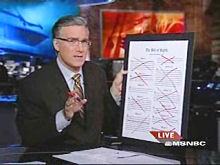
As Keith Olberman explains in "Why does habeas corpus hate America," people are exagerrating about the systematic removal of their Constitutional rights. Come on, a mere 90 percent of the Bill of Rights has been gutted by the Bush Administration, at least so far....

Countdown has learned that habeas corpus actually predates the "Constitution," meaning it's not just pre-September 11th thinking, it's also pre-July 4th thinking.

In those days, no one imagined that enemy combatants might one day attack Americans on native soil.

In fact, Countdown has obtained a partially redacted copy of a colonial "declaration" indicating that back then, "depriving us of Trial by Jury" was actually considered sufficient cause to start a War of Independence, based on the then-fashionable idea that "liberty" was an unalienable right.

Today, thanks to modern, post-9/11 thinking, those rights are now fully alienable.

The reality is, without habeas corpus, a lot of other rights lose their meaning.

But if you look at the actual Bill of Rights — the first ten amendments to that pesky Constitution — you'll see just how many remain.

Well, ok, Number One's gone.

If you're detained without trial, you lose your freedom of religion, speech, the press and assembly. And you can't petition the government for anything.

Number Two? While you're in prison, your right to keep and bear arms just may be infringed upon.

Even if you're in the NRA.

Three?

No forced sleepovers by soldiers at your house. OK. Three is unchanged.

Four?

You're definitely not secure against searches and seizures, with or without probable cause - and this isn't even limited to the guards.

Five… Grand juries and due process are obviously out.

Six. So are trials, let alone the right to counsel. Speedy trials? You want it when?

Seven. Hmmmm. I thought we covered "trials" and "juries" earlier.

Eight — So bail's kind of a moot point…

Nine: "Other" rights retained by the people. Well, if you can name them during your water-boarding, we'll consider them.

And Ten — powers not delegated to the United States federal government seem to have ended up there, anyway.

So as you can see, even without habeas corpus, at least one tenth of the Bill of Rights, I guess that's the Bill of "Right" now… remains virtually intact.

And we can rest easy knowing we will never, ever have to quarter soldiers in our homes… as long as the Third Amendment still stands strong.

The President can take care of that with a Signing Statement.

Watch the video.

Tuesday, October 10, 2006

Read it and weep

The details of Jose Padilla's incarceration have come out. His lawyers have filed a Motion to Dismiss the Indictment against him on the grounds that the Government has engaged in outrageous conduct. Read about what was done to Padilla for 3 1/2 years, via Glenn Greenwald's blog, and realize that the disgusting behavior (on the part of the authorities) detailed therein is now perfectly legal.

Unless there's a significant challenge from the courts to the Military Commissions Act (the legislative branch has shown its colors already), anyone--citizen or not--can be swept up and shut away without charge--forever--and nobody can do anything about it.

Says Greenwald:
The case of Jose Padilla is one of the most despicable and outright un-American travesties the U.S. Government has perpetrated for a long time. It is impossible to defend that behavior, let alone engage in it, and claim with any legitimacy that one believes in the principles that have defined and guided this country since its founding. But there has been no retreat from this behavior. Quite the contrary. The atrocity known as the Military Commissions Act of 2006 is a huge leap forward to elevating the Padilla treatment from the lawless shadows into full-fledged, officially sanctioned and legally authorized policy of the U.S. Government. The case of Jose Padilla is no longer a sick aberration, but is instead a symbol of the kind of Government we have chosen to have.

Christians acting like ... Christians

That ought not to be a "Man Bites Dog" headline, but it's rarer than it should be.

Forgiving enemies? Objecting to aggressive war? Protecting God's Creation? What a radical religion Christianity could be.

In the past I've written of Wendell Berry's typically withering take on Christianity's eager complicity in the world's greatest evils. "Because it has been so exclusively dedicated to incanting anemic souls into Heaven, [modern Christianity] has been made the tool of much earthly villainy." Berry argues that the religion is being misrepresented and misappropriated:

The religion of the Bible, on the contrary, is a religion of the state and the status quo only in brief moments. In practice, it is a religion for the correction equally of people and of kings. And Christ's life, from the manger to the cross, was an affront to the established powers of his time, just as it is to the established powers of our time. Much is made in churches of the "good news" of the Gospels. Less is said of the Gospels' bad news, which is that Jesus would have been horrified by just about every "Christian" government the world has ever seen. He would be horrified by our government and its works, and it would be horrified by him. Surely no sane and thoughtful person can imagine any government of our time sitting comfortably at the feet of Jesus while he is saying, "Love your enemies, bless them that curse you, do good to them that hate you, and pray for them that despitefully use you and persecute you."

A couple of recent events might indicate that at least some Christians (Evangelicals, even) are fighting to reclaim their religion from the sex-obsessed, xenophobic, racist types who've given it such a bad name.

In February U.S. Members of the World Council of Churches issued a strong statement on the Iraq invasion, declaring it to have been "launched in deception and violating global norms of justice and human rights." According to the AP, the statement also "warned the United States was pushing the world toward environmental catastrophe with a 'culture of consumption' and its refusal to back international accords seeking to battle global warming."

Bill McKibben wonders if recent developments might indicate that Evangelicals might take the lead in a drive to save the planet, citing the February issuing of the Evangelical Climate Initiative, "a document that may turn out to be as important in the fight against global warming as any stack of studies and computer models." The Initiative, McKibben argues, "made clear, among other things, that even in the evangelical community, 'right wing' and 'Christian' are not synonyms, and in so doing it may have opened the door to a deeper and more interesting politics than we've experienced in the last decade of fierce ideological divide."

We can only hope.

And Sally Kohn, of California's Center for Community Change, wrote a wonderful piece titled "What the Amish Are Teaching America.", which I've quoted from below:

The evening of the shooting, Amish neighbors from the Nickel Mines community gathered to process their grief with each other and mental health counselors. As of that evening, three little girls were dead. Eight were hospitalized in critical condition. (One more girl has died since.) According to reports by counselors who attended the grief session, the Amish family members grappled with a number of questions: Do we send our kids to school tomorrow? What if they want to sleep in our beds tonight, is that okay? But one question they asked might surprise us outsiders. What, they wondered, can we do to help the family of the shooter? Plans were already underway for a horse-and-buggy caravan to visit Charles Carl Roberts’ family with offers of food and condolences. The Amish, it seems, don’t automatically translate their grieving into revenge. Rather, they believe in redemption.

Meanwhile, the United States culture from which the Amish are isolated is moving in the other direction — increasingly exacting revenge for crimes and punishing violence with more violence. In 26 states and at the federal level, there are “three strikes” laws in place. Conviction for three felonies in a row now warrants a life sentence, even for the most minor crimes. For instance, Leandro Andrade is serving a life sentence, his final crime involving the theft of nine children’s videos — including “Cinderella” and “Free Willy” — from a Kmart. Similarly, in many states and at the federal level, possession of even small amounts of drugs trigger mandatory minimum sentences of extreme duration. In New York, Elaine Bartlett was just released from prison, serving a 20-year sentence for possessing only four ounces of cocaine. This is in addition to the 60 people who were executed in the United States in 2005, among the more than a thousand killed since the reinstatement of the death penalty in 1976. And the President of the United States is still actively seeking authority to torture and abuse alleged terrorists, whom he consistently dehumanizes as rats to be “smoked from their holes”, even without evidence of their guilt.

Our patterns of punishment and revenge are fundamentally at odds with the deeper values of common humanity that the tragic experience of the Amish are helping to reveal. Each of us is more than the worst thing we’ve ever done in life. Someone who cheats is not only a cheater. Someone who steals something is not only a thief. And someone who commits a murder is not only a murderer. The same is true of Charles Carl Roberts. We don’t yet know the details of the episode in his past for which, in his suicide note, he said he was seeking revenge. It may be a sad and sympathetic tale. It may not. Either way, there’s no excusing his actions. Whatever happened to Roberts in the past, taking the lives of others is never justified. But nothing Roberts has done changes the fact that he was a human being, like all of us. We all make mistakes. Roberts’ were considerably and egregiously larger than most. But the Amish in Nickel Mines seem to have been able to see past Roberts’ actions and recognize his humanity, sympathize with his family for their loss, and move forward with compassion not vengeful hate.